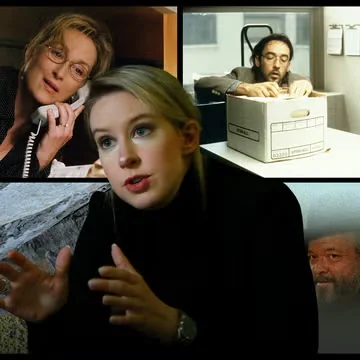
Films that ask about perception usually end up asking about narration. The best versions leave the audience unsure which character was doing the describing.
We all wear tinted glasses. We cannot separate what we see from what we already know. Documentarians, journalists, and photographers strive to capture an objective portrait of their subject, but, for better or worse, they can’t entirely shed their personal perspective. It’s part of being human.
This curiosity is what drives writer and filmmaker Nathan Fielder, whose work orbits the how and why of human behavior and often involves pushing people to their limits. He sometimes toes the line between cringe and shock, but it’s all in service of understanding them better. OnNathan for You,a comedy series that originally ran on Comedy Central, he feigned business expertise to convince small businesses to adopt outlandish marketing strategies to increase their sales. On HBO’sThe Rehearsal,Fielder staged elaborate, theatricalrehearsalsto help people overcome personal challenges; later, he turned those same unconventional resources to help improve commercial pilot communication in an effort to avoid plane crashes (no, really). His docu-reality series stage intricate ruses that allow him—and us—to observe the uncanny behavior of regular people. Fielder brings a puckish quality to his projects, where he stages human experiments to observe people, often eliciting humor while also revealing new possibilities. These projects made him the perfect person to take on Elizabeth Holmes, the founder of Theranos, who lied to investors—and the world—about a revolutionary blood-testing device that turned out to be nothing more than smoke and mirrors. She is the protagonist of his latest project,You Can See Everything.
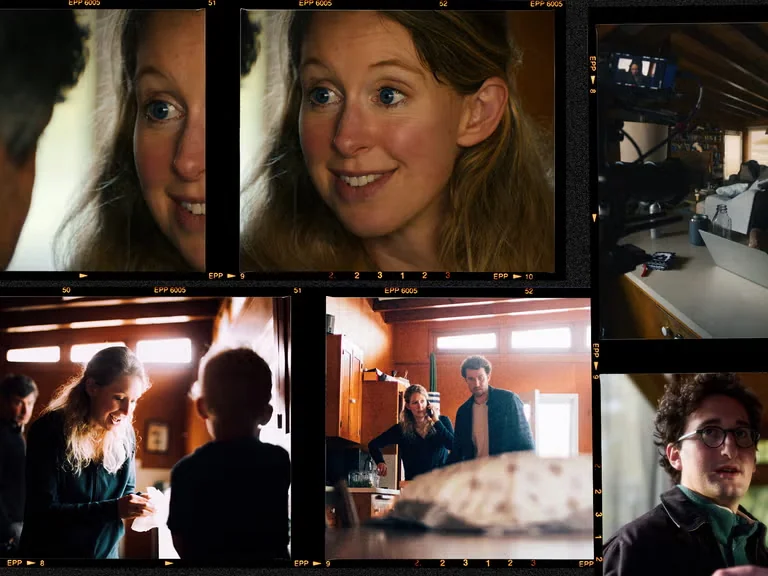
In the documentary, codirected by Lance Oppenheim (ofPrimetime), Fielder narrows in on Holmes and her husband, San Diego hotel heir Billy Evans, a little over a month before she surrenders for her 11-year prison sentence. The same unblinking, crystal-blue eyes that made Holmes the face of Silicon Valley feature heavily inYou Can See Everything.This time, instead of appearing in cover shoots in her signature sleek black turtleneck and holding a small blood capsule, she sits opposite Fielder in a seaside rental in Del Mar, California. The couple has invited the filmmaker into their home 24/7 to show the world the real woman Billy contends has been smeared by the media. Given the chance to observe her up close, Fielder strives to portray this uncanny person objectively, only to find a story full of red herrings. This riveting documentary’s most surprising discovery is the sympathy Fielder manages to conjure for someone the world previously believed was empirically guilty. It leaves you asking, can we really know anyone?
Existing in a reality where Nathan Fielder—the characterandthe person—studies Elizabeth Holmes feels like an impossible stroke of fate. His trickster interrogation tactics function as a foil to Holmes’s house of mirrors. In January 2022, a federal jury convicted Holmes on four counts of corporate fraud. That’s fact. But Fielder finds that Holmes and her husband live in a reality they designed to fit their narrative better. Holmes not only believes she never defrauded anyone, she also asserts she’s incapable of lying. She backs this puzzling assertion with semantic games, telling Fielder that the investor misunderstood her when she said the machine “can” function in certain ways. For some reason, you want to believe her, especially after you realize she seemingly can’t understand the Abbott and Costello joke “Who’s on first?”
Fielder endeavors to fully understand Holmes. Ironically, that’s why Evans and Holmes invited him and Oppenheim into their home: to better portray Holmes’s public image and, they believe, give a more objective look into their lives. Fielder doesn’t spare Holmes from his skepticism, asking incisive questions about her complicity in the fraud and conspiracy, but he also gives her room to be seen beyond it. Some evidence suggests she was the victim of misunderstandings (albeit unlikely), as well as the scapegoat for a host of evil men, including her ex-boyfriend, Theranos cofounder Sunny Balwani, and her husband.
Billy, though initially the arbiter of transparency, actively obscures what we can see and then, later, when Holmes goes to jail, what we know about her. He repeatedly steamrolls Holmes throughout the movie, from snatching a bowl to whisk eggs for her to stopping interviews in their tracks when he feels Fielder is becoming overtly challenging or asking too many questions. His motivations soon begin to feel dubious, and a clear parallel exists between his allegation of media manipulation regarding Holmes’s sentencing and his own revisionist manipulation of her story. But every detail inYou Can See Everythingcreates a maze of blind alleys, further obscuring what we understand about Holmes and her situation. Lacking conclusions, we remain privy to our own subjectivities—grasping at the conclusions we reach ourselves.
After Holmes reports to prison, her absence leaves space for meditation. Fielder then introduces an unexpected fourth character, Amanda Seyfried.
Her presence adds a dimensionality rarely seen in documentaries. Seyfried approaches Holmes’s personality from a new perspective, letting her subjectivity guide her as she weighs empathy and wariness. Reprising her role fromThe DropoutinRehearsal-esque reenactments, she tries to parse whether Holmes’s conversations with Fielder are genuine or an elaborate ruse. The smallest details frequently lead Seyfried and Fielder into long discussions about intent, but the strangeness emerges in trying to pin down her knotty personality. She even challenges Fielder on whether he holds bias, acting as the documentary’s barometer of truth. But as they examine these actions, all these contradictions feel increasingly human. Are we not all at the mercy of our ego? Do we not all experience the world so radically singularly, subject to our own penchants? Can we ever be fully known by others, whether it’s loved ones or people who have spent time with us at our most vulnerable? Is there such a thing as an unbiased truth? In light of this, Holmes warrants our compassion; despite her guilt, she remains a captive of her own subjective reality, just like Fielder and all of us watching.
Readers Also Read
Vibey Films to Watch After You Can See Everything

Fall’s Best Dresses Have Arrived

Minimalist Midi Skirts Are Trending for Fall

Every Fall Outfit Should Include These Sneakers

15 Feminist Horror Films to Watch This Halloween
Is Virginia Woolf This Season’s Literary It Girl?
The Art of Dressing for Fall in the City
Gap and Victoria Beckham Reunite for a Capsule
Why Is Everyone Romanticizing the 2010s?
The 30 Best Celebrity Halloween Costumes
How “Wicker” Compares to “The Wicker Husband”
The 10 Best French Beauty Products for Mature Hair